
Think about how many times you have had to find the right salesperson.
You hire someone. You train them. You finally start to see momentum, and then something happens. They quit. They get sick. They stop showing up. Or, worse, they slowly lose motivation and your sales stall before you even notice why.
I have lived this cycle myself. There were times when the revolving door became so exhausting that I paused campaigns altogether. Not because the opportunity was gone, but because I didn’t have the energy to start over again. Hiring, retraining, correcting and rebuilding the same process felt like running on a treadmill that never stopped.
That experience planted a question that shaped how we build Zebyl: what would a business look like if its sales system never stopped working?
The Real Cost of the Revolving Door
When a salesperson leaves, the loss is bigger than one empty seat. The leads they were working go cold. Follow-ups that were “on the list” never happen. Customers who called last week get no answer this week. And the owner, usually the one person who can’t afford to lose focus, gets pulled back into the front line.
Most small and mid-sized businesses don’t lose customers because their product is weak. They lose them in the gaps: the call that went to voicemail after hours, the text that never got a reply, the quote that nobody followed up on. Those gaps open every time the team changes.
A Helper That Doesn’t Call in Sick
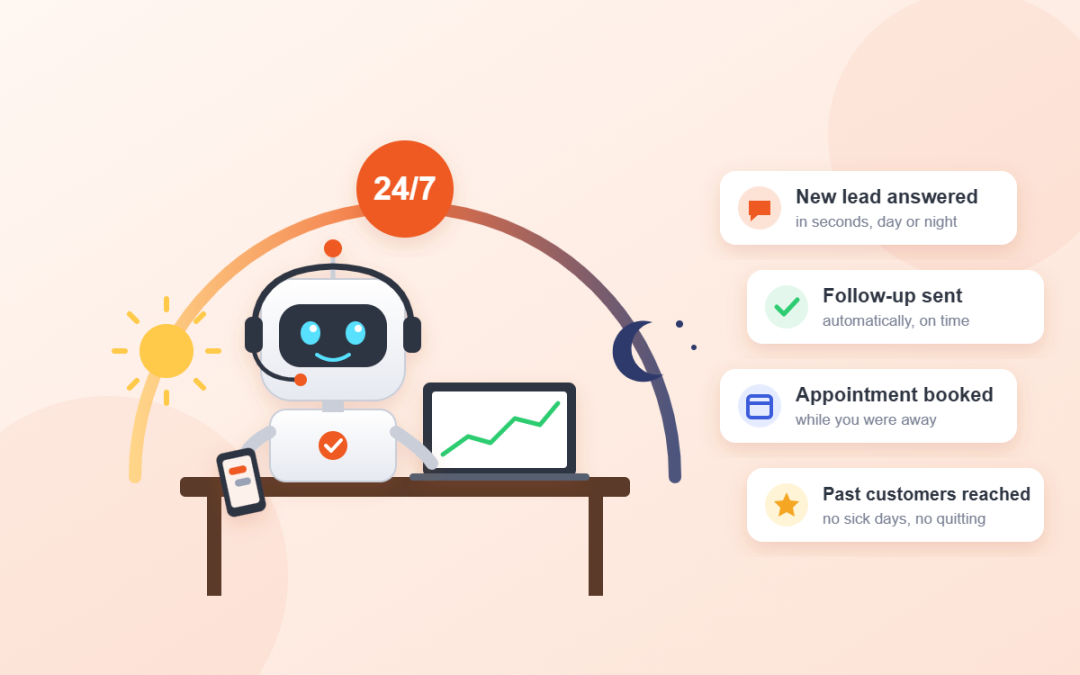
For years I imagined a friendly, reliable helper, almost like a lovable robot, that would show up every single day, do its job consistently and get better over time instead of burning out.
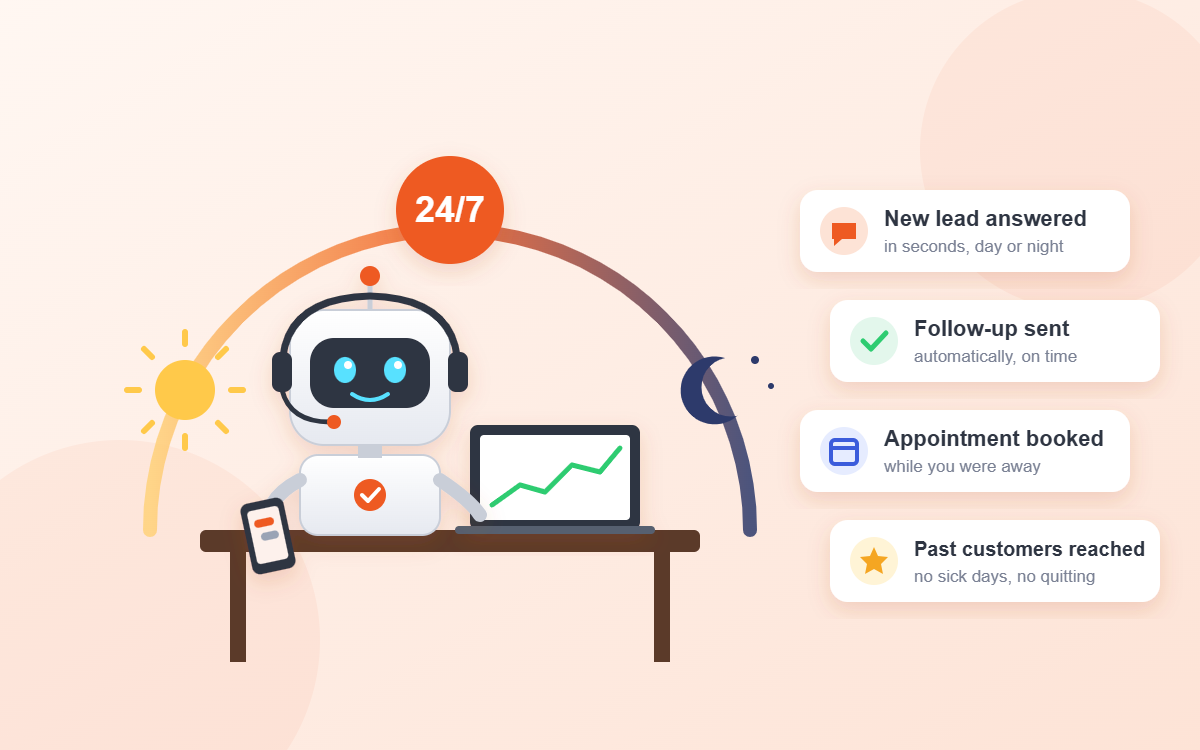
A system that didn’t call in sick.
A system that didn’t forget.
A system that didn’t quit at the exact moment things started working.
At the time it felt like a fantasy. Quietly, while most of us were busy fighting the same staffing battles, technology caught up. What once took a whole sales floor can now be handled by tools that answer questions instantly, follow up automatically, reach back out to past customers and keep conversations moving, without losing patience or energy.
What a Smart Sales Assistant Actually Does
We call this kind of system a Smart Sales Assistant. In practice it is a handful of simple pieces working together:
- It answers right away, day or night. A chatbot on your website and in Facebook Messenger greets visitors, answers common questions and collects contact details, even at 11 p.m. on a Sunday.
- It turns your business number into a texting line. Customers already prefer to text. With business texting on your existing landline number, they can reach you the way they want to, and your team can answer from one shared inbox.
- It follows up so nobody falls through the cracks. New inquiries get a timely reply, quotes get a reminder, and appointment reminders go out on schedule, without someone having to remember.
- It reconnects with past customers. Simple text campaigns bring back people who already know and trust you, which is often the easiest sale a business can make.
None of this replaces human connection. It protects it. When the repetitive work is handled, your people can spend their energy where it matters: real conversations, closing the sale and taking care of customers.
A Better Question to Ask
This shift changes the conversation entirely. Instead of asking, “How many salespeople do I need?” we can start asking, “How do I build a system that supports growth without wearing everyone down?”
What excites me most is not the technology itself. It is the relief it brings. Relief from chaos. Relief from constant rehiring. Relief from the fear that momentum will collapse the moment someone walks out the door.
Where to Start
You don’t need to rebuild your business to get here. Start small:
- Find your biggest gap. Is it after-hours inquiries, slow replies to texts, or follow-ups that never happen? Pick one.
- Automate that one gap first. A website chatbot, texting on your business line, or automatic reminders can each be running in days, not months.
- Watch what changes. Count how many conversations the system starts and how many turn into customers. Then add the next piece.
If this idea once felt like a fantasy, it no longer is. The real question is: what would you be able to achieve if your sales system never stopped working?
Ready for a sales system that never stops working?
Tell us a little about your business and we’ll show you how Zebyl can help. It only takes a minute.